Shipping war risk insurance premiums are likely to continue rising, Daejin Lee told CNBC
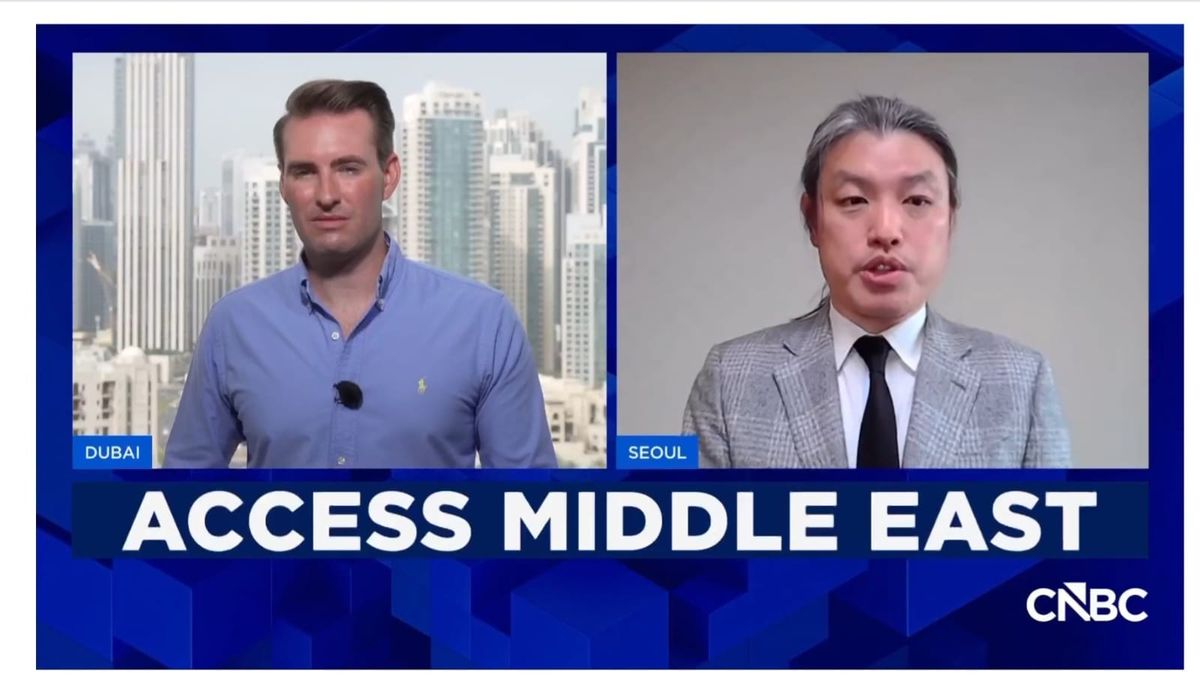
I recently spoke with Dan Murphy at CNBC about the escalating situation in the Strait of Hormuz, sharing my views on the scale of stranded vessels, the collapse in traffic, the surge in war-risk insurance premiums, and the practical limits of naval escorts.
- CNBC official Website https://www.cnbc.com/video/2026/03/18/shipping-war-risk-insurance-premiums-are-likely-to-continue-rising.html
Shipping war risk insurance premiums are likely to continue rising; escort doesn’t solve the core of the issue, Daejin Lee told CNBC
On stranded vessels and crews inside the Gulf
“This is not a shipping delay. it's a maritime hostage situation."
We estimate around 1,000 ocean-going vessels stranded in the Gulf, with roughly 20,000 seafarers onboard. If we include smaller regional ships, that could rise to over 3,000 vessels and up to 40-50,000 crew. This is no longer just a supply chain disruption. It is effectively a global maritime hostage situation.
From a shipowner perspective, there are clear financial pressures — inactive vessels may face off-hire claims or idle time costs, unless partially offset by demurrage.
But more importantly, this is a human issue. Captains and crews are operating in a high-risk conflict zone, facing war-risk fatigue, constrained resupply, and in many cases, uncertainty over whether their insurance coverage remains valid
On war risk insurance.
"Insurance isn't the barrier. The barrier is that ships are getting hit."
Yes, insurance is available, and with crude tanker rates at record highs, the financial incentive to transit is clearly there in theory.
In fact, we are indeed seeing selective movements, including some Chinese and Iranian-linked vessels, as well as a few Indian, Turkish, and Saudi-linked ships operating under Iran’s ‘regulated passage’ system.
However, there has been no meaningful rebound in traffic. Transit through the Strait of Hormuz has effectively collapsed by 80–90%, to fewer than 10 vessels per day, down from around 120–150 pre-crisis. Even accounting for limited AIS visibility, actual volumes remain extremely low. The reason is simple, despite available insurance and strong commercial incentives, shipowners need a sustained period without attacks before they return. This is not about caution. It is about a very real and immediate security threat to crew’s life and safety.
On rising insurance premiums
"We have not seen the peak on premiums yet."
War risk premiums have surged from around 0.1–0.3% to 1–3% of vessel value or hull value, it is a five to tenfold increase in just weeks. Historically, during the Iraq War in 2003, the peak was about 3.5%, and we are already approaching that level.
For a typical $100 million, 10-year-old VLCC, that translates to roughly $1–3 million per voyage in insurance alone, before even factoring in today’s record-high freight rates
On effectiveness of escorting vessels through the strait
“One drone strike on an escorted vessel and the whole exercise loses credibility."
Naval escorts may help increase outbound traffic, particularly for vessels already inside the Gulf. But for inbound flows, the impact will likely be very limited.
The key issue is credibility, if even one escorted vessel is successfully hit, especially in a multi-drone attack scenario, premiums will spike immediately and confidence will collapse. So escorts can support flows at the margin, but they cannot normalize the market under current threat conditions
On selective transit of Chinese and other negotiated ships
“That is not a 'reopening’. Selective traffic cannot substitute for normal traffic”
What we’re seeing is not a reopening but it’s a controlled flow. Even if 10 to 20 vessels per day are moving, that is only about 10–20% of normal traffic. This is a selective corridor, not a functioning market. As a result, energy flows remain constrained, keeping oil prices elevated, pushing bunker costs higher, and ultimately sustaining very strong freight rates globally.a snapshot of estimated trade volume by key sectors
Media Citations
- Insurance business https://www.insurancebusinessmag.com/us/news/marine/trump-waives-us-shipping-law-adding-to-marine-cover-complexity-569032.aspx
- Bangkok Post https://www.bangkokpost.com/business/general/3220375/insurers-look-to-manage-risk-from-middle-east-conflict