스페셜 분석: 왜 Strait of Hormuz는 더 큰 그림 속에서 봐야 하는가 — 다음 에너지 초크포인트 봉쇄는 이미 시작됐을 수 있다
오늘은 특별 분석으로 Strait of Hormuz를 보다 넓은 에너지 컨텍스트에서 살펴봅니다. 오늘 Gulf Intelligence의 Daily Energy Markets 팟캐스트에 참여했습니다. 초대해주신 Sean Killian Evers, Medilyn Singh, Stephanie Gatdula께 감사드리며, Bill Spindle, Bora Bariman, Rustin Edwards와의 날카로운 토론도 인상적이었습니다. (아래 이벤트 링크를 참조)
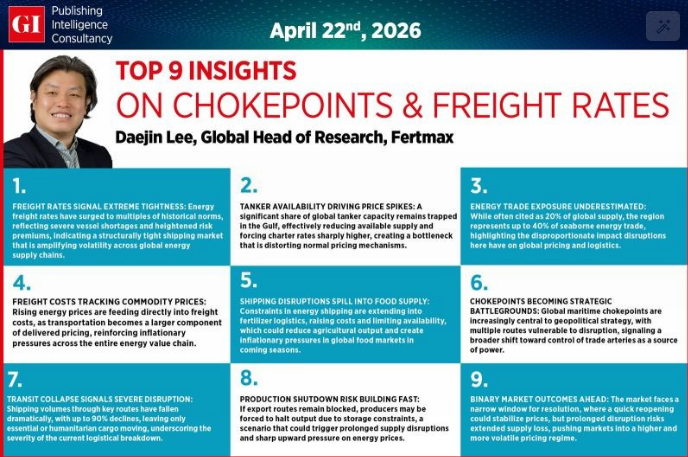
또 한 번의 휴전 연장. AIS 데이터는 여전히 제한적인 흐름을 보여주고 있습니다.
스페셜 분석: 왜 Strait of Hormuz는 더 큰 그림 속에서 봐야 하는가 — 다음 에너지 초크포인트 봉쇄는 이미 시작됐을 수 있다
지금 시장에서 나오는 대부분의 코멘트는 휴전, 핵 협상, 정권 안정성에 집중되어 있습니다. 하지만 제가 보기에는 이러한 프레임은 너무 좁습니다. 호르무즈는 하나의 초크포인트일 뿐이며, 그 외에도 여러 지점이 존재하고, 이들은 하나의 시스템 안에 있습니다.
우리는 종종 호르무즈 해협을 단일 사건처럼 바라보지만, 실제로는 그렇지 않습니다. Strait of Malacca, Bosporus, Suez Canal, Strait of Gibraltar, 그리고 Panama Canal은 모두 하나의 지도 위에 있는 연결된 지점들입니다. 각각은 글로벌 교역의 병목 지점이며, 거의 모든 경우에서 미국은 해군력, 상업 인프라, 또는 전략적 영향력을 통해 직간접적으로 관여하고 있습니다.
이것이 우리가 염두에 둬야 할 배경입니다. 지금은 호르무즈에 초점이 맞춰져 있지만, 머지않아 다른 해협에서도 동일한 논의가 반복될 가능성이 있습니다. 결국 이는 글로벌 교역의 ‘동맥’을 누가 통제하느냐의 문제입니다.
‘5–7% 질문’: 다음 이슈도 에너지 문제라면 어떻게 될까?
글로벌 해상 원유 교역의 약 5%는 Bosporus를 통과합니다. 추가로 약 6~7%는 Suez Canal을 경유하며, 약 3%는 Panama Canal을 통과합니다. Strait of Malacca는 약 29%로 더 큰 비중을 차지하지만, 롬복(Lombok)과 순다(Sunda) 등 대체 항로가 존재한다는 점에서 성격이 다릅니다.
현재는 호르무즈가 핵심 리스크 지점입니다. 그러나 보스포루스, 홍해 진입로, 또는 싱가포르/말라카 해협에서 유사한 교란이 발생한다면, 해상 에너지 교역에 미치는 누적 영향은 단일 초크포인트 분석을 훨씬 뛰어넘을 것입니다.
시스템의 취약성은 특정 해협 하나에 있는 것이 아니라, 여러 초크포인트가 동시에 정책적 수단으로 활용되거나 그렇게 인식되고 있다는 점에 있습니다.
왜 지금 더 중요한가: 에너지는 새로운 ‘노동’이다
이 논의를 다시 보게 만드는 구조적 변화가 있습니다. 에너지는 이제 AI와 밀접하게 연결되어 있으며, AI는 점점 더 인간 노동을 대체하고 있습니다. 이를 10~20년의 시계열로 확장해 보면, 에너지를 통제하는 것은 곧 글로벌 경제의 생산 능력을 통제하는 것과 같은 의미를 갖게 됩니다.
이로 인해 초크포인트의 전략적 의미도 변화하고 있습니다. 해협은 더 이상 단순한 운송 경로가 아니라, 미래 경제의 ‘연료’를 좌우하는 레버입니다. 지금 호르무즈에서 나타나는 ‘마찰’은 21세기 ‘노동’을 둘러싼 경쟁이라는 측면에서 해석할 수 있습니다.
‘90% 현실’
현재 상황으로 돌아가 보겠습니다. 정상적인 시기에는 하루 약 120척의 선박이 Strait of Hormuz를 통과하며, 이 중 절반 정도가 에너지 관련입니다. 그러나 현재 통과 선박은 10~20척 수준에 불과합니다. 약 90% 감소한 것입니다. 그마저도 식량 및 긴급 인도적 화물이 중심입니다.
이 점은 ‘휴전’이라는 단어를 해석하는 데 매우 중요합니다. 헤드라인은 정상화를 시사하지만, AIS 데이터는 에너지 회랑이 정상 대비 약 10% 수준으로만 작동하고 있음을 보여줍니다. 이는 완전히 다른 현실이며, 운임·보험·정유 시장은 전자가 아니라 후자를 반영하고 있습니다.
결론
호르무즈 자체가 전부는 아닙니다. 이는 더 큰 패턴의 현재적 표현입니다. 전략적 초크포인트들이 에너지, 나아가 AI 시대의 생산 능력을 둘러싼 경쟁의 무대가 되고 있습니다.
호르무즈만 보면, 전체 지도가 보여주는 흐름을 놓치게 됩니다.
Special Analysis: Why the Strait of Hormuz Must Be Read in a Larger Picture — The Next Energy Chokepoint Closure May Already Be Coming
Most of the commentary you’ll read right now is focused on ceasefires, nuclear frameworks, and regime dynamics. From where I sit, that framing is too narrow. Hormuz is one chokepoint but there are several others, and they belong to the same system.
When we discuss the Strait of Hormuz, it is often treated as a singular event. It isn’t. The Strait of Malacca, Bosporus, Suez Canal, Gibraltar, and the Panama Canal are all part of the same map. Each is a pinch point in global trade, and in nearly every case the United States has a direct interest or presence — whether through naval power, commercial infrastructure, or strategic leverage.
That is the backdrop worth holding in mind. Even though the current conversation is centered on Hormuz, we may soon be having the same conversation about another corridor. At its core, this is a question of who controls the arteries of global trade.
The 5–7% question: what happens if the next episode is also about
Roughly 5% of global seaborne oil trade moves through the Bosporus. Another 6–7% transits the Suez Canal, and about 3% through the Panama Canal. The Strait of Malacca is larger still at around 29%, though unlike the others it has practical alternative routing via Lombok and Sunda.
Today, the flashpoint is Hormuz. But if a comparable disruption were to develop around the Bosporus, the Red Sea approaches, or the Singapore/Malacca corridor, the cumulative impact on seaborne energy trade would be materially larger than any single-chokepoint analysis suggests.
The vulnerability of the system is not concentrated in any one strait — it lies in the fact that multiple chokepoints are increasingly being used, or perceived, as instruments of policy at the same time.
Why this matters more now: energy is becoming the new labor
There is a longer-term shift that reframes the discussion. Energy is now tightly linked to AI, and AI is increasingly substituting for human labor. Extend that trajectory over the next 10–20 years, and controlling energy begins to look very much like controlling productive capacity in the global economy.
That changes the strategic meaning of a chokepoint. A strait is no longer just a shipping route — it is a lever over the fuel of the next economy. The “friction” we are seeing in Hormuz today is, in that sense, a contest over the labor of the 21st century.
The 90% reality
Back to the present. Under normal conditions, roughly 120 vessels transit the Strait of Hormuz each day, about half of them energy-related. Current traffic is running at 10 to 20 — roughly a 90% reduction. What little is moving is weighted toward food and high-priority humanitarian cargo.
This matters for how we interpret the word “ceasefire.” Headlines suggest normalization. The AIS data suggests the energy corridor is operating at roughly 10% of its normal capacity. These are two very different realities — and markets, particularly freight, insurance, and refining, are responding to the latter, not the former.
The takeaway
Hormuz is not the story by itself. It is the current expression of a broader pattern: strategic chokepoints becoming the stage on which energy — and, by extension, the productive capacity of the AI era — is contested.
Watching only Hormuz risks missing what the map is actually telling us.
Episode Description
Trump’s indefinite ceasefire masks unresolved tensions, with Bill Spindle expecting a JCPOA-style framework but warning conflict could resume. Rustin Edwards highlights soaring freight costs squeezing refining margins. Bora Bariman sees prolonged economic fallout and geopolitical fragmentation. Daejin Lee stresses constrained shipping capacity and risks to energy and food supply chains if disruptions persist.
https://www.youtube.com/watch?v=bHu1R2f6-2s&t=1285s
https://www.linkedin.com/video/live/urn:li:ugcPost:7452604779001765888/